



ADVENTURE SERIES
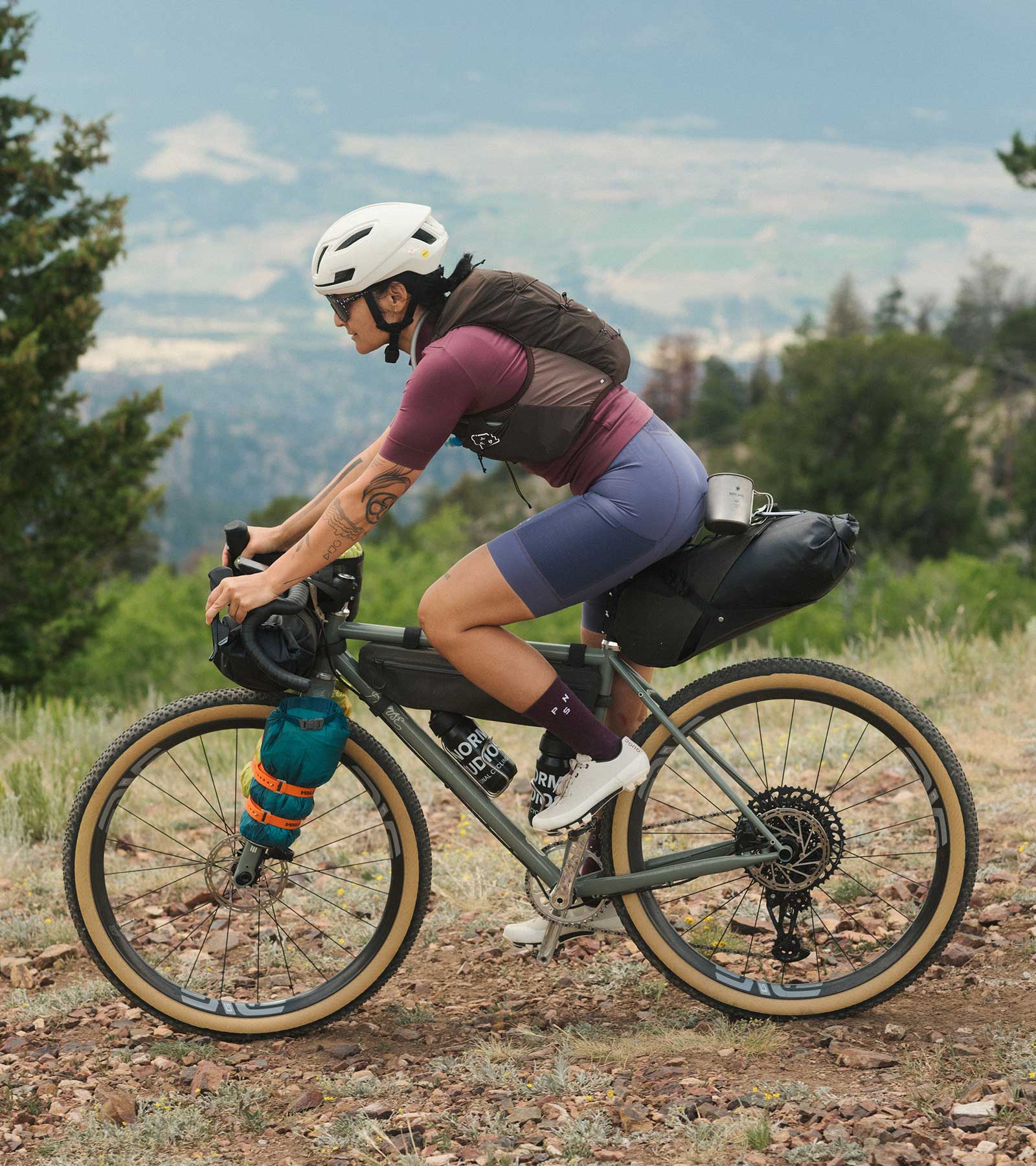
A collection of QUOC rider stories from the front lines of monumental cycling efforts. From cross-country ultras and bikepacking epochs to intense Everesting challenges, the series documents the raw pursuit of pushing human limits, using the bike as a tool for ultimate exploration.
Where Plans Meet the Wind
Camille Gardent and Riccardo Argenta set out with a meticulous plan to cross Fuerteventura by bike in the Gran Tourer III. Lost luggage set them back, a puncture slowed them down, and a storm forced them to camp on a cliff instead of the fishing village they'd planned to reach. What followed was three days of volcanic plains, turquoise coastline and completely unscripted adventure. Below, Camille tells the story.

Riccardo and I are very different travellers. He maps every kilometre. I lose myself in the scenery. He’s not much of a talker — I talk a lot. But somewhere between his structure and my daydreaming, we find a rhythm. It’s been like that since we met, seven years ago, drawn together by a shared love for sport and movement. He was a national-level athlete in Italy; I played semi-professional handball in France. We were both wired for competition. But over the years, that restlessness shifted. The races gave way to longer missions, first in the Pyrenees near our home in the south of France, then further — wherever we could find a route worth riding.
The way we travel now is simple. There is somewhere on the planet, or just in the village next door, that we want to see. And we find a way to do it by bike. A tent, a sleeping bag, food and snacks — nothing more. We crossed Gran Canaria on foot a few years back, carrying our packs and sleeping in the wild. This time we wanted to cross Fuerteventura by bike.
“There’s a quiet gratitude in realising that — for the time, for the lack of obligation, for the freedom of having nowhere you absolutely need to be.”
- Camille
The trip began with the airline losing our bikes. By the time they reappeared, half the first day had vanished. Riccardo had everything planned out — distances, waypoints, daily targets. None of it applied anymore. But that's bikepacking. Plans are fragile, and the sooner you surrender to that, the lighter everything feels. Crossing an island is just a line on a map. It doesn’t really matter. And there’s a quiet gratitude in realising that — for the time, for the lack of obligation, for the freedom of having nowhere you absolutely need to be.

On the way to a fisherman village we’d hoped to reach, we found ourselves being chased by a storm cloud so dark you could see the rain beneath it. Then Riccardo punctured. I was relieved it wasn’t me — it would have taken twice as long. But we stopped. And because we stopped, we turned around. Behind us was the most enormous rainbow, stretched over the entire island. The things that slow you down are sometimes the ones that make you look in the right direction. Especially when you're crossing somewhere you'll never return to. You have to turn around.
We never reached the village that night. The storm was too close, so we set up camp on a cliff — a little defeated, dinner inside the tent. The spot wasn’t what we’d imagined, but it was next to the sea, and we were together, and that was enough. When we woke at dawn, the fisherman village was right below us, literally down the cliff. We laughed. We’d been navigating by paper map and hadn’t thought to check our phones — and the village wasn't even that remarkable once we saw it in daylight. The island had decided for us, and its plans were better than ours.
“After six or seven hours of riding, not much else occupies your mind. It’s not about how many kilometres you cover. It’s about how the day looked. What you saw. How you felt.”
- Camille
The day that followed was unscripted. Volcanic plains, turquoise coastline, and 2,000 metres of climbing under an open sky. Everything changed every 10 kilometres. We rode through sand. We climbed in the heat. And somewhere along the route, we made sure to stop in every village for snacks and Aquarius — a Spanish electrolyte drink that doesn’t exist in France but that Riccardo and I are both mildly obsessed with. He calls me Miss Snacks. Sometimes it's the only thing that keeps me moving forward.

What I love most about bikepacking is how completely you belong to your surroundings. The direction of the wind matters. You hear the animals before you see them. There are no notifications, no schedule — just the road and where to sleep. After six or seven hours of riding, not much else occupies your mind. It’s not about how many kilometres you cover. It’s about how the day looked. What you saw. How you felt.
We were out there for three days in the end. A short but meaningful adventure. There is something about carrying only what you need and sleeping wherever you end up that rewires how you think about travel. You take what the landscape gives you. And in return, you get access to places a car could never reach. You never miss a sunset or a rainbow.
Words: Camille Gardent
Photos: Gines Diaz
What Camille and Riccardo Wear: