



Ben Sandin: Design, Identity, and the Shoes That Disappear
A cycling shoe feels right when you don’t notice it. That's the starting point for Ben Sandin, QUOC’s lead designer, whose work sits at the intersection of performance engineering, material intuition and personal expression. In this conversation, Ben opens up about the tension between comfort, speed and style — and why the best design often means knowing what to leave out. From the influence of nature and old mechanisms to the gap in the market that gravel helped define, he reveals how QUOC's shoes are shaped by honest experience, not marketing briefs.
“A cycling shoe feels right when you don’t notice it.”
- Ben, Lead footwear designer at quoc

An interview with Ben:
When someone puts on a pair of QUOC shoes, what do you hope they feel?
Comfortable in a physical sense, obviously — no distractions from discomfort on the foot. But also comfortable in an expressive way. Objects can express parts of your identity, and when you wear something like a shoe and spend that much time in it, taking it to different places, you become attached to it differently. I want to design shoes people can take on those experiences — something that genuinely reflects who they are. Not saying this happens for everyone, but a lot of people are searching for products that fit with their identity.
As a designer, how do you know when a shoe feels “right”?
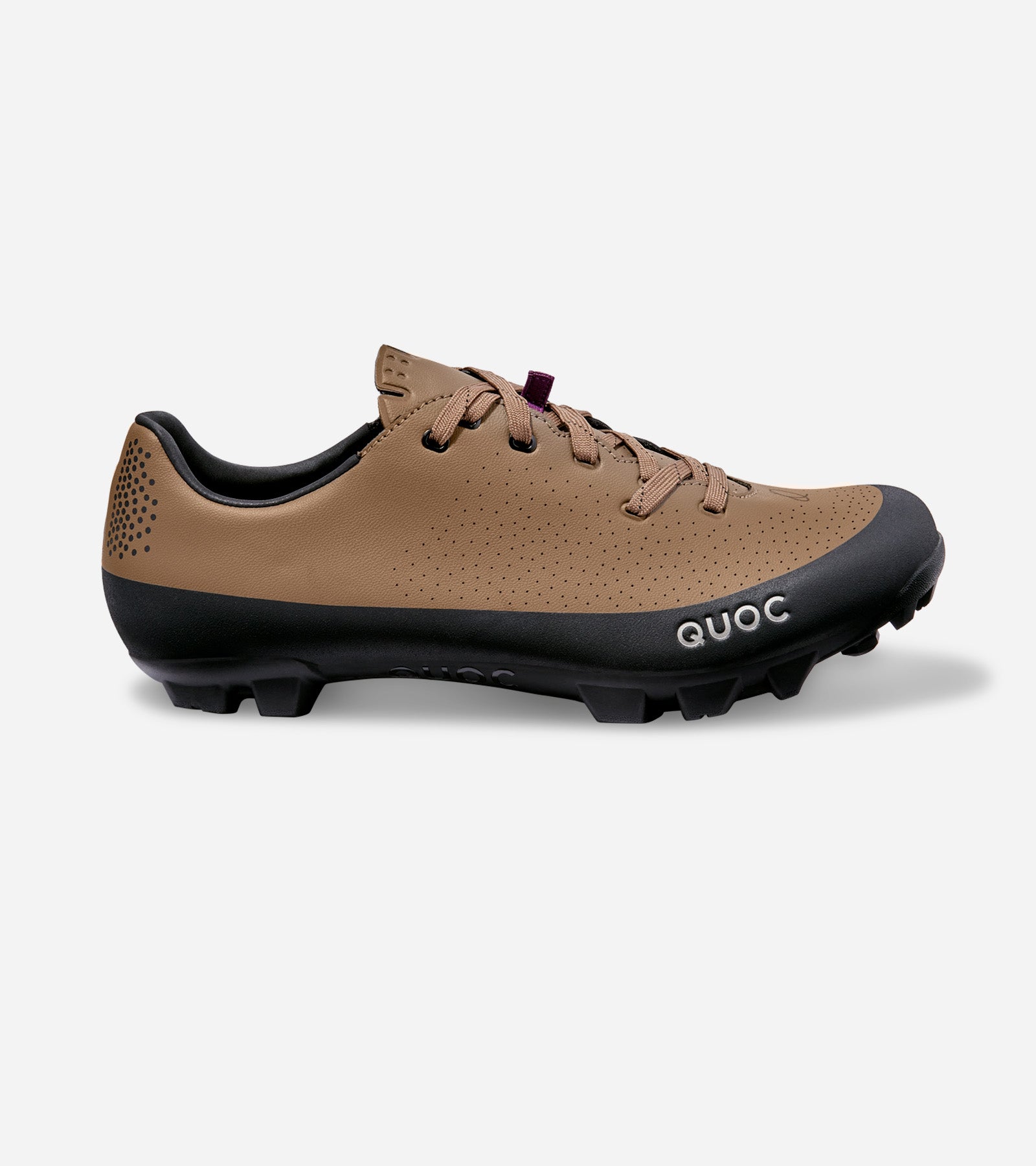
When it feels good physically, but also when it fits the style of riding you do and the image you want to project. For QUOC, that isn’t necessarily what the classic cyclist looks like — it’s probably more niche than that. We’re trying to create a new cycling aesthetic, offering something that doesn’t already exist. Not too slick, not too rugged. Somewhere in the middle, similar to how gravel carved out its own space.
“Objects can express parts of your identity — when you spend that much time in something, you become attached to it differently.”
- Ben, lead footwear designer at quoc

What’s the most difficult part of designing a cycling shoe?
Finding the balance between performance, comfort and style. Those three things inform every part of the shoe — from the sole to the materials, the upper, the insole, the closure system. Then you add in that every rider has different shaped feet and different needs. We try to break it down into as many parts as possible and really focus on a design brief that can work across different riders. Every discipline, every rider wants something slightly different.
Once you have a concept, what happens next?
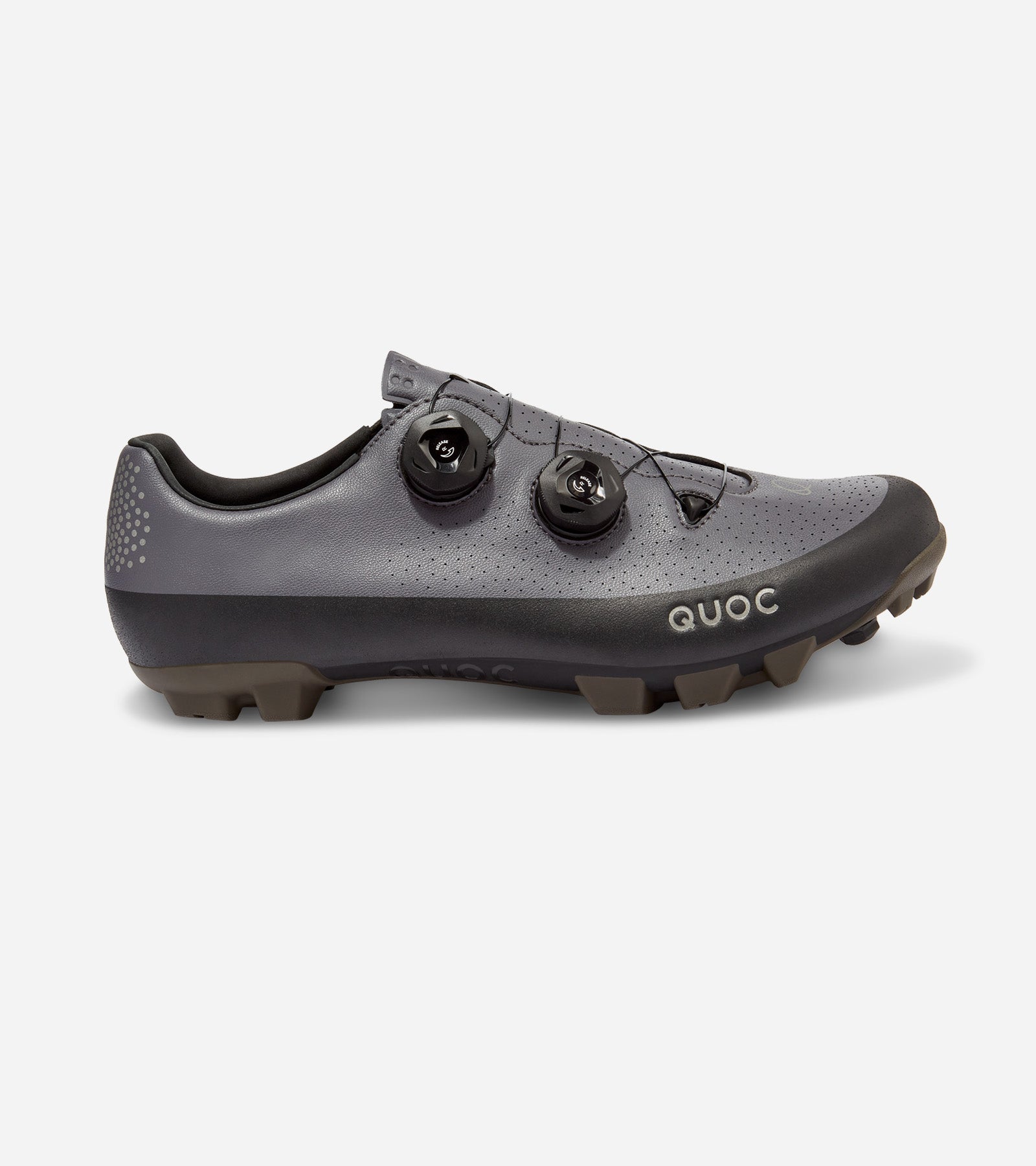
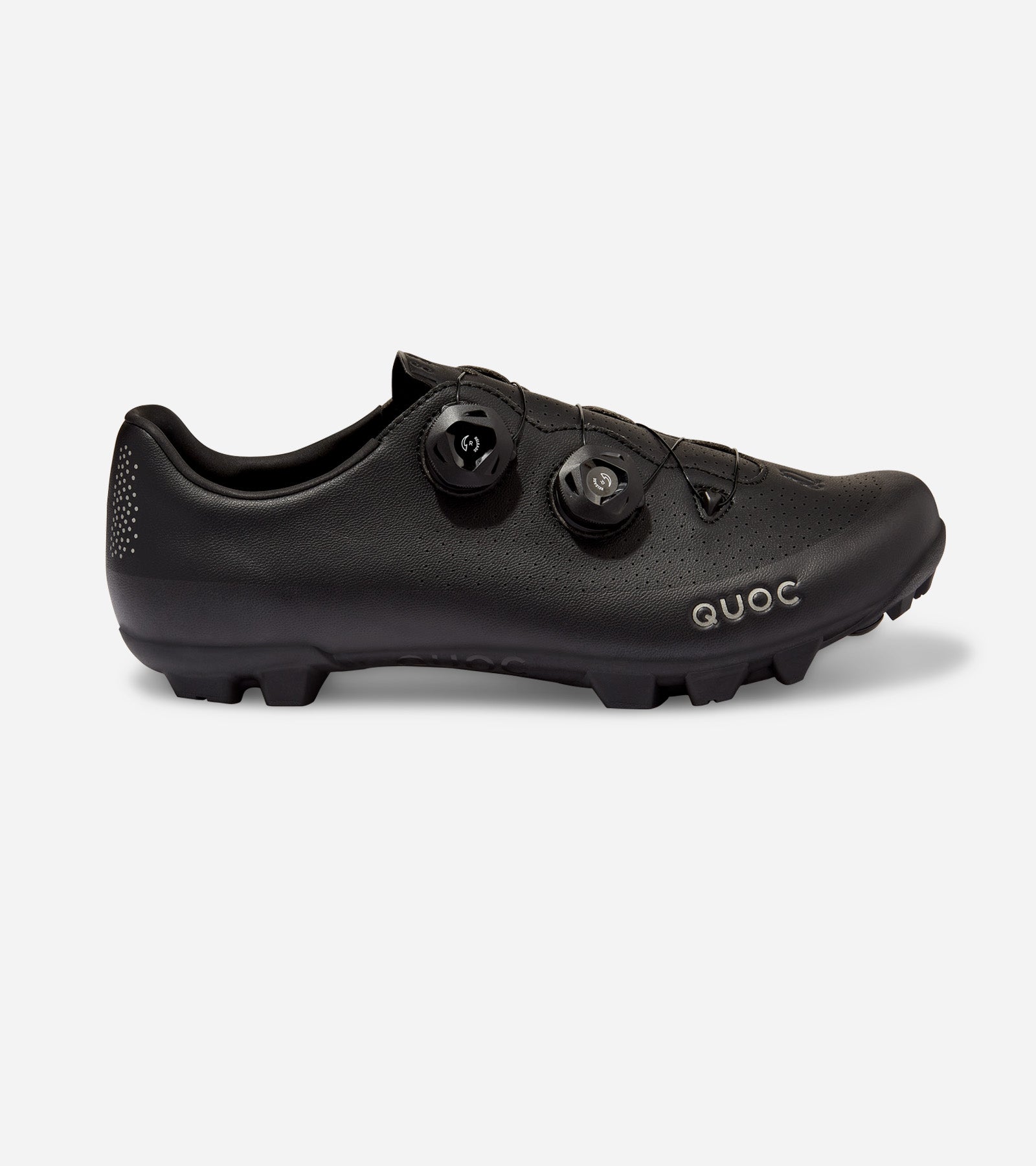
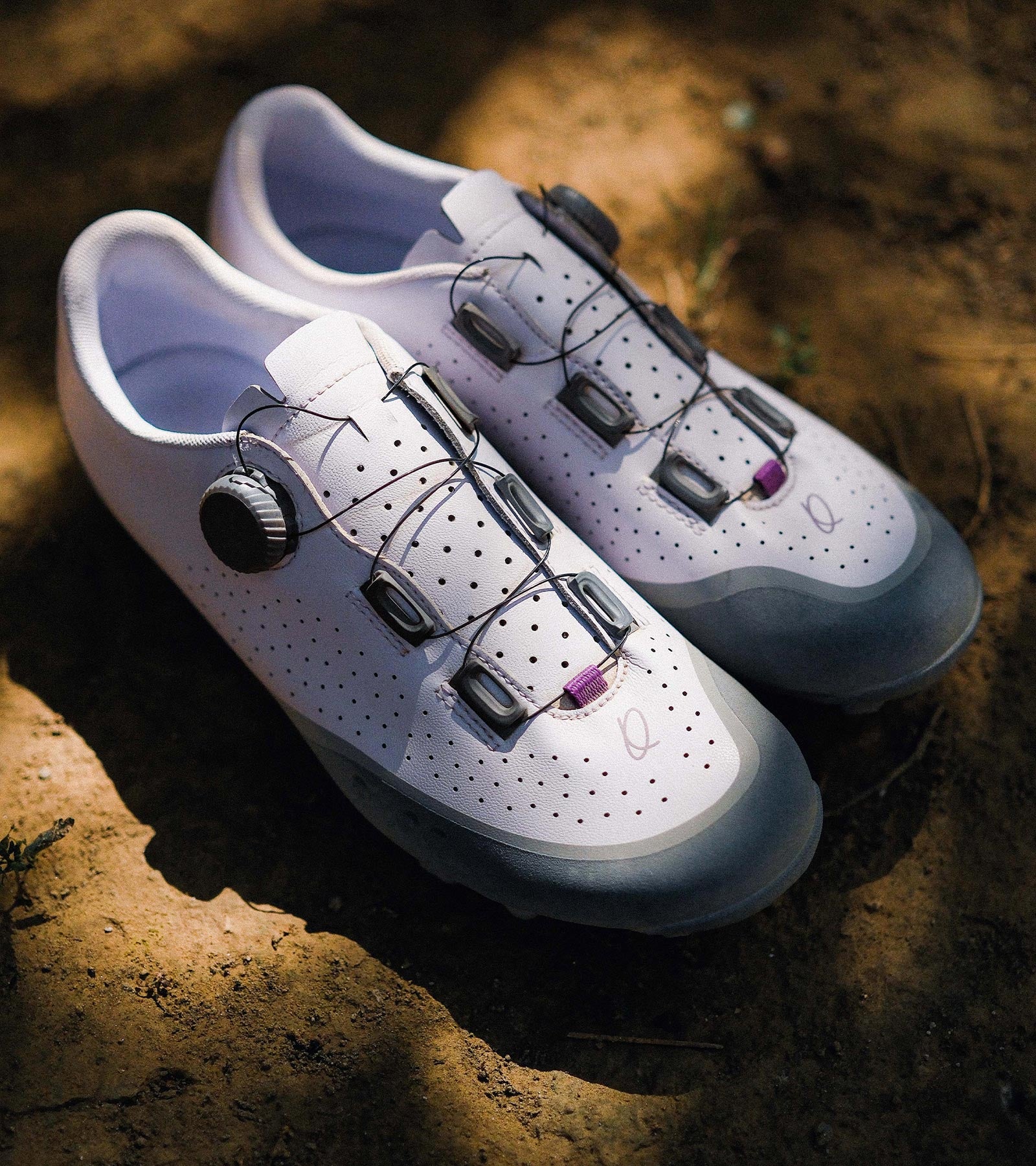
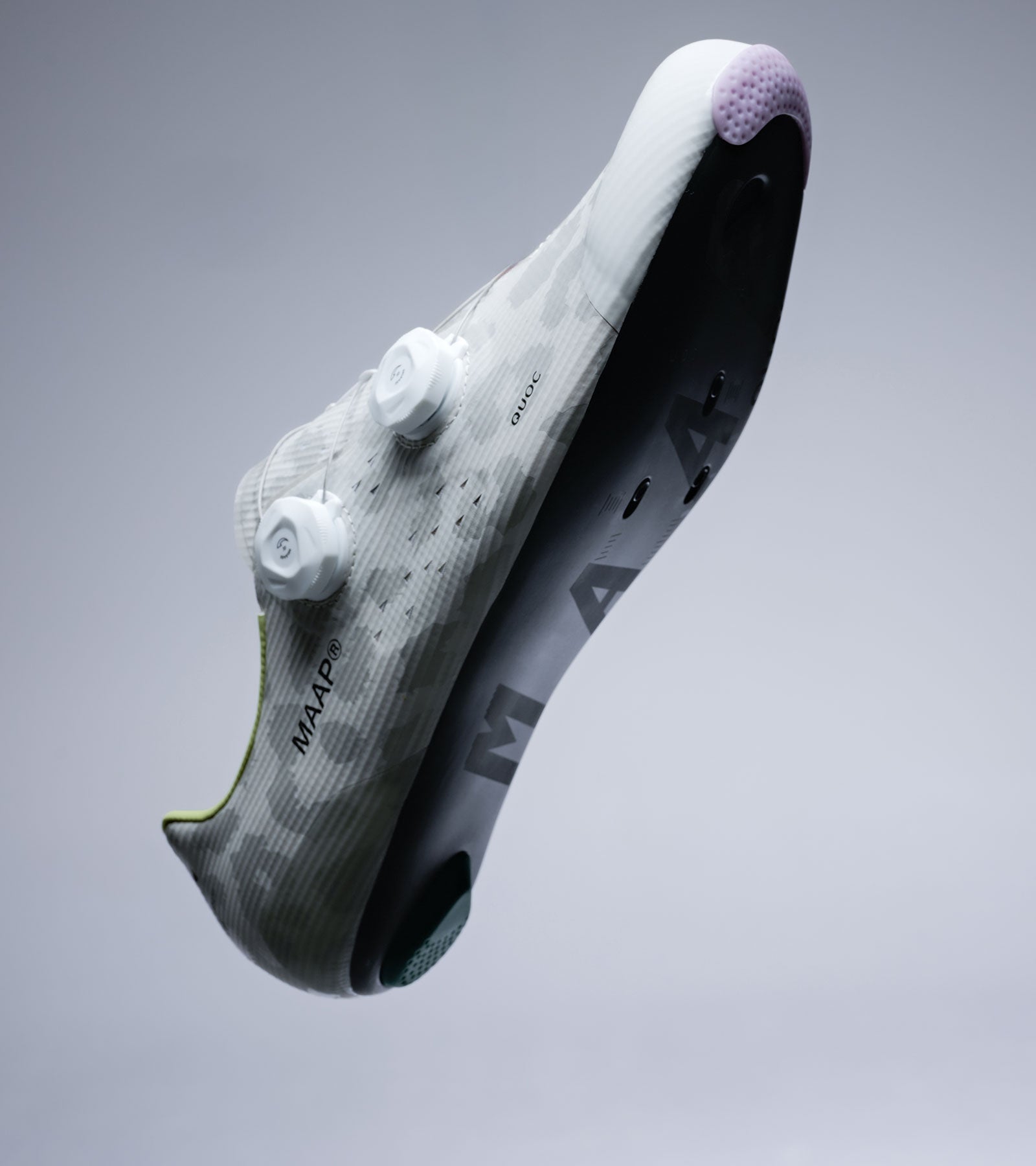
We send it to our test riders first, who give us really valuable feedback on fit and performance. Then in-house we look closely at manufacturing and technical details — improving materials, composition and structure. We’re constantly refining things, right down to small components like the dial. It affects both performance and aesthetics, so we redesigned it to improve engagement and release, and made it more ergonomic with a cleaner design.
Everyone at QUOC rides — how does that influence the product?
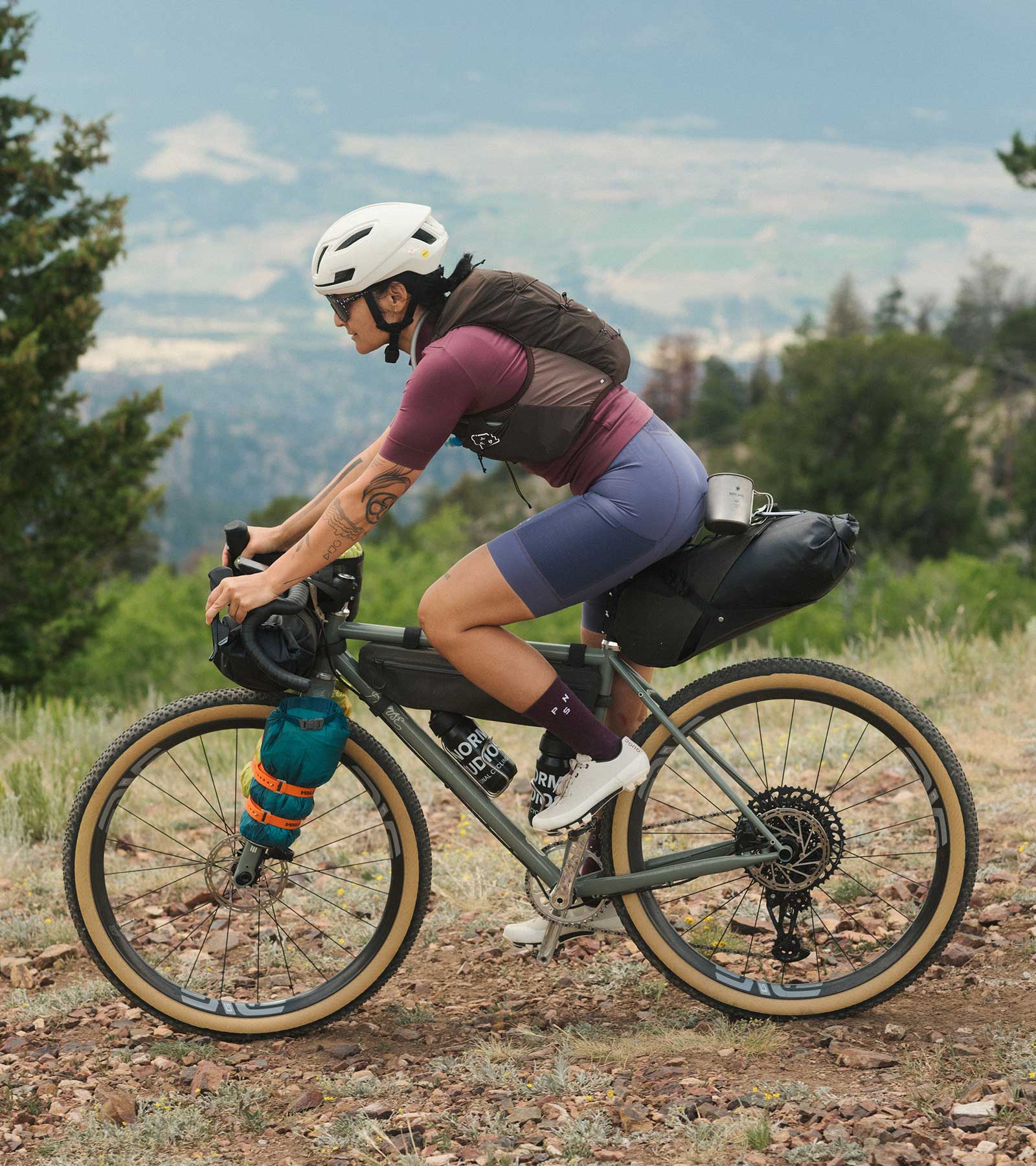
Our team rides across different disciplines — gravel, enduro, commuting — which gives us a wide range of perspectives. It helps ensure we’re not just repeating what’s already out there. Everyone contributes feedback and helps shape a product they’d actually want to wear themselves. The team is spread across different parts of the world too, so we get insight into different cycling cultures and markets.

Where do you usually find inspiration?
A lot of it comes from nature — different landscapes and how they change with the seasons. We’re lucky to travel and ride in some amazing places, and I’m often thinking about how those environments might influence a colourway or a texture. It can be hard to switch off. Even when I’m riding, I’m thinking about how something could be improved. I’m also inspired by everyday objects and mechanisms. I collect old tools — things that don’t just function, but feel well-considered. That contrast between nature and industrial objects really feeds into how I design.
If you had to simplify what you’re trying to achieve, how would you describe it?
I just want to design something that looks good. Sometimes it’s as simple as that. You want to put something on and have it be enough of a statement where people think, “Oh that’s nice,” but not so much that it demands attention. I just want to feel comfortable in it, that it reflects part of my identity and matches the style of riding I do, whether that’s gravel or road. There’s a lot of transition between those worlds, but we’re going for a more casual look.
Who is that more minimalist aesthetic actually for?
A lot of people, I think. That’s where the gap in the market is. Not too slick, not too rugged. Somewhere in the middle, the way gravel found its place between road and mountain biking. A lot of riders are looking for exactly that.

What makes you proud as a designer?
I feel proud when I see riders coming back for multiple pairs. That tells you we're doing something right. Ultimately, it’s always great just seeing people out using the product. Meeting riders out in the field or at a bar who genuinely love their shoes, sometimes as much as I loved designing them.
Finally, what do you think QUOC does differently from other brands?
We stay true to our identity. Quoc himself has a strong vision to create something special, and we haven’t wavered from that. We’re not trying to be everything to everyone—we’re focused on that specific gap, the riders who want something different from the standard cycling aesthetic.
Photography & Videography by Elliott Waring
What Ben Wears: